Five Minutes to Salvation. The Rebirth of Communication Between Anna and Mark
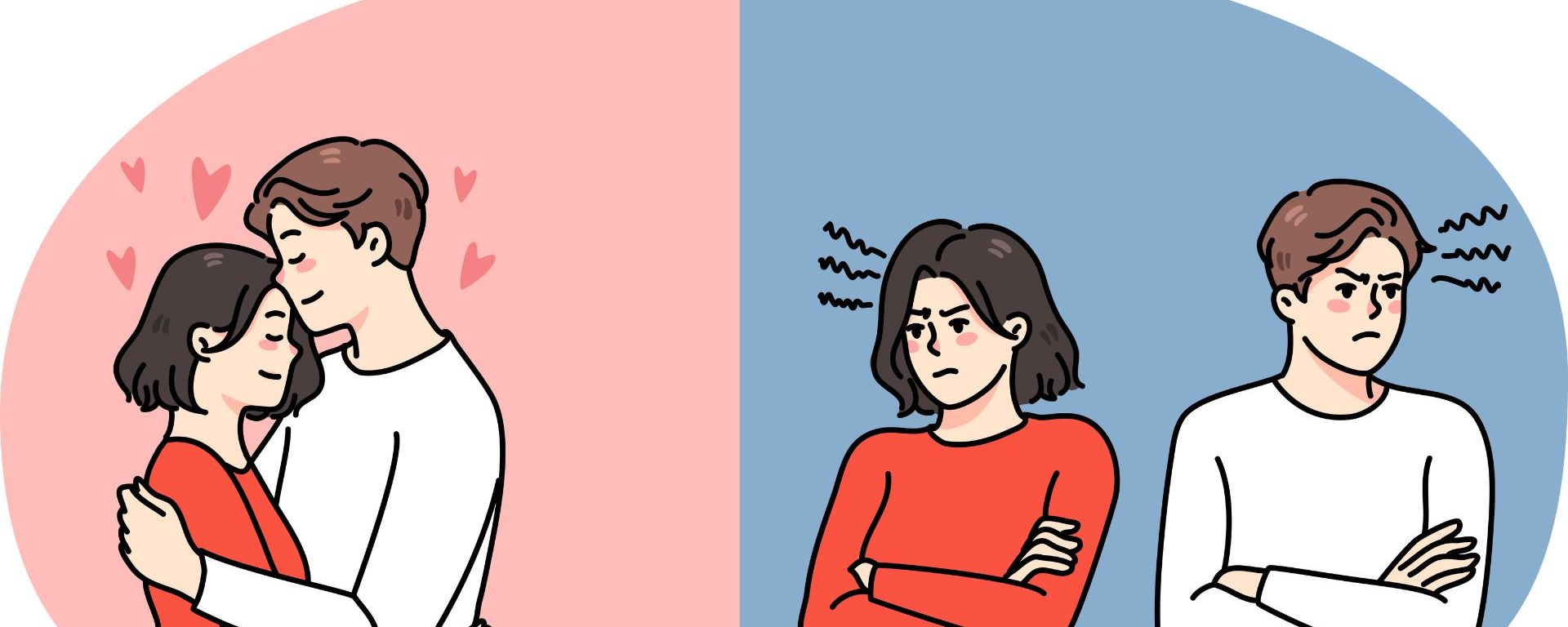
In a picturesque apartment in London, Anna and Mark found themselves at a crossroads. They had been the epitome of a loving couple, often finishing each other’s sentences and knowing the other’s favorite food, music, or book. Yet recently, something had changed. Conversations had become minefields, full of misunderstood statements and misinterpreted actions. They were drowning in the silence that followed heated arguments—a silence filled with a thousand unspoken words.
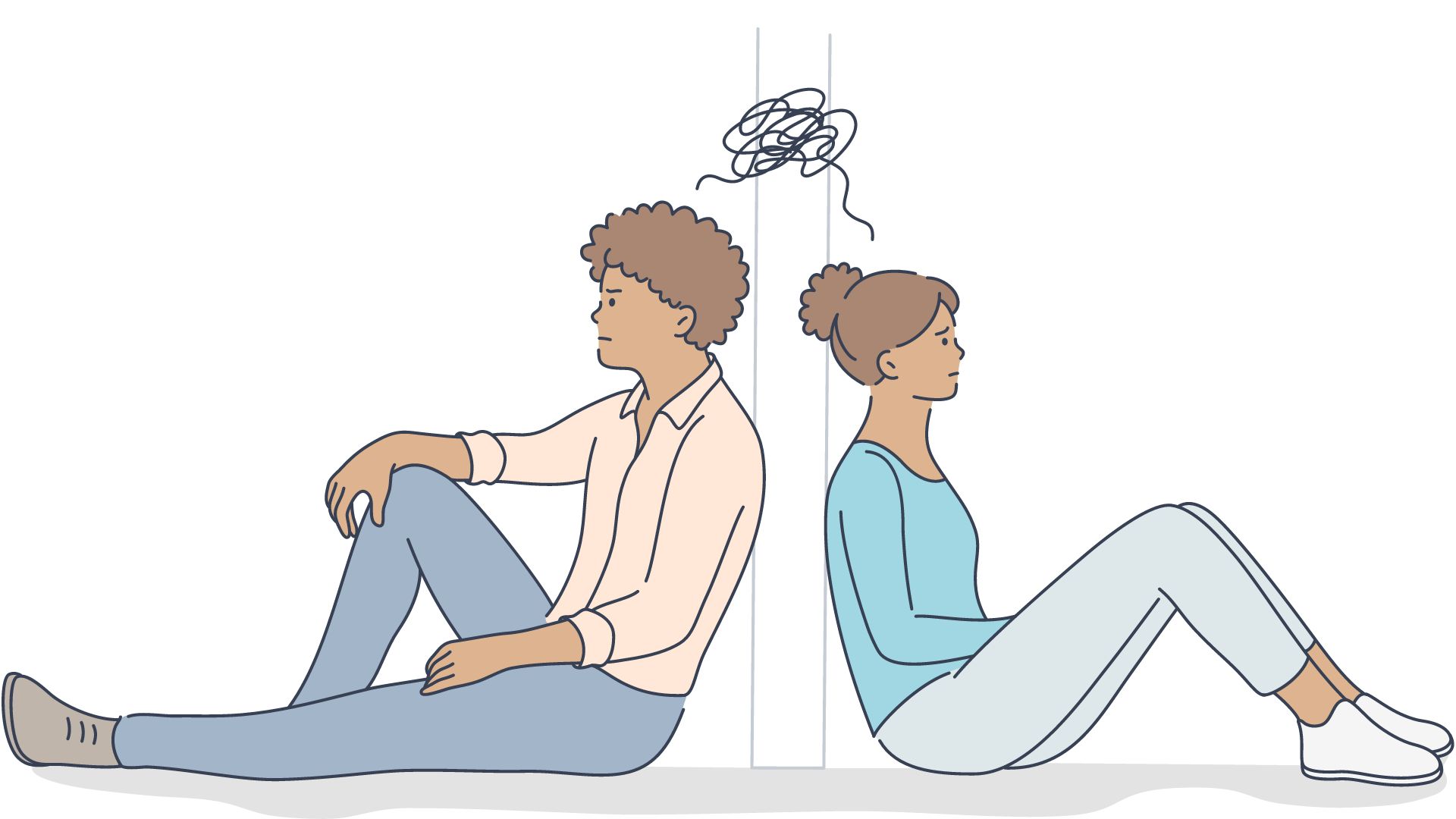
Mark, an accountant, felt overwhelmed by work deadlines, while Anna, a freelance writer, felt the isolating impact of working from home. Both burdened by their individual stresses, their busy lives left little room to openly communicate about their issues. Mark often retreated, immersing himself in spreadsheets to escape confrontation. Anna then interpreted his withdrawal as indifference and, feeling rejected, delved into her writing. Every time they tried to bridge the gap, their words seemed to widen it.
One evening came when both were free from immediate commitments. Mark cooked Anna’s favorite dish, and they sat down to dinner. As they ate, Anna confronted the palpable tension between them. “Mark, we can’t go on like this. I feel like we’re becoming strangers.”

Mark looked up, his eyes meeting hers, “I know, Anna. I also want to fix this, but I don’t even know where to start.”
“Maybe we start by really listening to each other,” Anna suggested.
They decided to try a simple exercise. Each would speak for five minutes without interruption, focusing solely on expressing their feelings and concerns. When Mark spoke, Anna was surprised to learn about his work-related worries, the pressure of a possible layoff, and how inadequate he felt during their fights because he couldn’t find the right words to say. When it was Anna’s turn, Mark was stunned to hear her talk about the loneliness and creative block she was grappling with and her feeling that their emotional distance was becoming a chasm too wide to bridge.
Genuinely listening to each other, they discovered that their emotional barriers were more related to external pressures than to each other as a couple. Both acknowledged their individual shortcomings in communication and recognized that they had projected their personal anxieties onto each other. Realizing the depth of their misunderstanding, they decided to consult a couples therapist to improve their communication skills.

Over time, the walls between them began to crumble. While not an immediate cure-all, therapy, combined with their newfound open dialogue, helped them rebuild their relationship, piece by piece. They still had fights and misunderstandings, but they learned to see them as hurdles to overcome rather than insurmountable walls. The inability to communicate that once seemed an insurmountable obstacle now seemed like a challenge they were both willing to face for love, respect, and a desire to grow together.
Through their journey, Anna and Mark found that while poor communication is a difficult problem, it is far from unsolvable. What it requires is the courage to confront the issue head-on and the commitment to work together toward a healthier, more empathetic relationship.
Many of us operate under the illusion that a romantic relationship should be devoid of conflict, problems, or challenges. We’re led to believe, either by social norms or perhaps even by fairy tales, that any sign of discord means that something must be fundamentally wrong in our relationship. This perception can lead to unjustified frustration and disillusionment when conflicts inevitably arise.
The truth is far from this black-and-white view. Conflicts and issues are a normal and integral part of any relationship. They are not indicators of ruin but rather opportunities for growth and honing skills in emotional regulation and problem-solving. When addressed constructively, conflicts can strengthen the relationship and deepen the emotional bond between partners
Crosswords and half-and-half pizzas: Mark and Anna’s path to understanding
In any relationship, the labyrinth of communication is one of the most complex puzzles to solve. Each individual is an enigma, a world of experiences, beliefs, fears, and desires that shape how we interpret and respond to others’ words and actions. That’s why communication inefficiency can have such disastrous effects: it’s like trying to navigate a stormy sea without a reliable compass.


Personality differences often present a significant challenge. Imagine an extrovert and an introvert trying to plan a weekend together. While one may find the idea of socializing with a large group of people exciting, the other may crave a more intimate and relaxed atmosphere. Without open and understanding dialogue, both risk feeling dissatisfied or, worse, misunderstood.
Cultural backgrounds can pose another hurdle. Each culture has its own set of social norms and communication expectations, which can lead to confusion or, in more severe cases, cross-cultural tensions. For instance, in some cultures, eye contact is a sign of honesty and openness, while in others, it might be considered intrusive or inappropriate.
Lack of time is another common issue, especially in an increasingly hectic society. Many of us live lives so busy that we barely have time to connect with ourselves, let alone a partner. This can lead to rushed or superficial communications that are not conducive to deep understanding and mutual respect.
Finally, emotional barriers like anger and frustration can distort our perception and listening abilities, turning conversations that could be constructive into emotionally charged clashes.

To overcome these and other communication obstacles, it’s vital to adopt a range of strategies. Active listening, which involves paying close attention to the speaker and confirming your understanding through feedback, is one of the most effective tools. Couples therapy can provide a safe and structured environment where both parties can learn to communicate more effectively, uncovering the hidden mechanisms that guide their behaviors and reactions.
But perhaps the most crucial key is the willingness to work together to overcome challenges, recognizing that perfection is an illusion and that the goal is rather a healthy and respectful relationship. Communication is a journey, not a destination, and every step forward is a step toward a deeper and more meaningful connection with those we love.
Ah, and then there’s the eternal dilemma of “where do you want to go for dinner?”—a seemingly simple question that has the power to ignite an epic drama worthy of a movie. Mark wants sushi, while Anna is dreaming of a delicious plate of pasta. They attempt diplomatic negotiation, weighing pros and cons as if deciding the fate of a nation. In the end, they realize they both love pizza—and so, with a sigh of relief and a knowing smile, they order a half margherita, half tuna pizza. It’s a small but meaningful triumph, a truce in the complex battlefield of communication. And as they sip a glass of wine, both think, “Maybe, in the end, we’re not as incomprehensible as we thought.”
You see, communication can be difficult, but sometimes all it takes is finding your own “half and half” to realize that despite all the challenges and misunderstandings, understanding is within reach—or in our case, within fork’s reach!
The Sushi and Spaghetti Dilemma: Balancing Empathy and Assertiveness in Mark and Anna’s Life
Returning to the dinner episode, let’s take the example of Mark, who wants sushi, and Anna, who is dreaming of a lovely tomato pasta. Empathy would suggest that each try to put themselves in the other’s shoes, trying to understand the reasons for such preferences. Maybe Mark had a stressful week and sushi is his comfort food, while Anna might associate pasta with a familial warmth she misses. However, just being empathetic doesn’t always solve the dilemma.

And here we enter the minefield of the limitations of empathy. Suppose Mark tries to be empathetic and agrees to go to an Italian trattoria, but as he eats his pasta, he thinks of the delicious nigiri he could have had. Or perhaps it’s Anna who agrees to go to a Japanese restaurant but then spends the entire dinner sighing in front of her plate of sushi, thinking how wonderful a plate of spaghetti would have been. In both cases, empathy alone did not solve the problem; rather, it added another layer of frustration or resentment.
This shows that, while being a fundamental ingredient, empathy is not the only aspect to consider in conflict or misunderstanding management. Sometimes an open and honest dialogue is necessary, which may also include a healthy dose of confrontation. And perhaps, as in the case of Mark and Anna, the solution might come from a creative compromise: the half margherita and half tuna pizza was a win for both, not only for their taste buds but also for their ability to communicate and find common ground.

The challenge, then, lies in balancing empathy and assertiveness, understanding, and confrontation. And maybe, every once in a while, in finding the courage to say, “You know what? Let’s go for a pizza. At least we agree on that!” And in that moment, as they share a pizza on any given night, both can smile, recognizing that life—like a pizza—is made of many different ingredients, and the beauty lies in combining them in the right way.
Handbook for Imperfect Lovers: Adventures and Misadventures in the Chaotic Maze of Love
Ah, the inexhaustible game of life and love, with its highs and lows, its crises and its discoveries! If there were a handbook for making relationships work, it would probably be the world’s shortest book with only one piece of advice: “Be prepared to improvise!” But that’s the beauty of it, in the not knowing. In the countless possibilities of getting it wrong, but also in the endless opportunities for getting it right. Anna and Mark have shown us that the road to marital bliss isn’t paved with perfect communication and feather pillows, but rather with potholes, obstacles, and occasional days of therapy. And while the light at the end of the tunnel may sometimes seem more like a small candle than a bright lighthouse, that’s where hope lies. It’s in those small moments of understanding, in the shared laughter after a misunderstanding is resolved, or in the simple act of spending a lazy Sunday on the couch doing absolutely nothing. So, the next time you find yourself in a spiral of miscommunication, remember: if love were easy, everyone would do it, and then what fun would that be? The beauty is in the mess, in the chaos, in piecing it all together. And as the old saying goes: it’s not the destination, it’s the journey. Cheers to all hopeful travelers!


 Esercizi di vita desta