The Memory of Others and the Fragile Freedom to Tell the Story of One’s Life
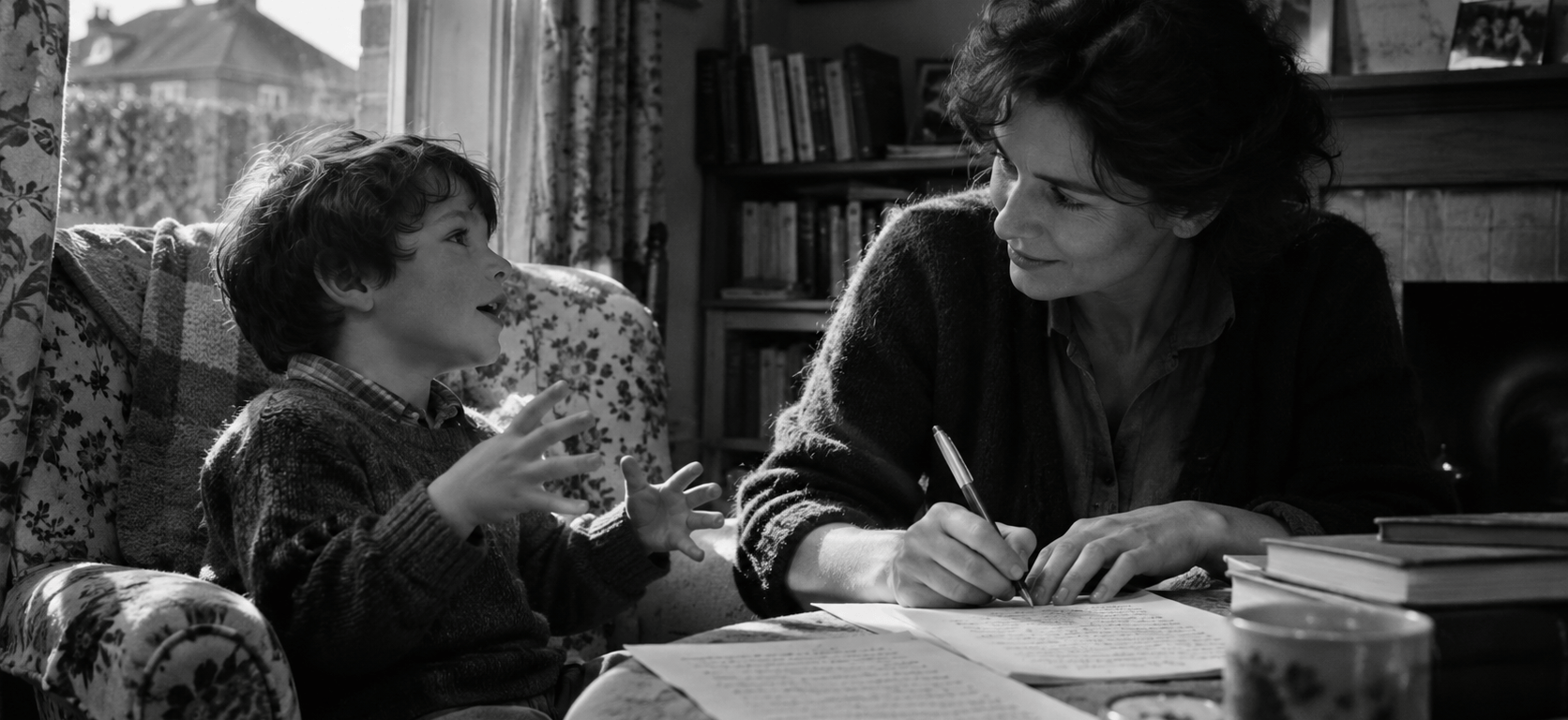
At the age of five, David Robson had found a way of owning a book he had never actually bought. Every afternoon, returning from school, he would sit beside his mother on a floral armchair and tell her a story he had heard in class. She would take a sheet of paper, carefully write down whatever the child could remember and, once there were enough pages, sew them together. Only later would David discover that the story was Fantastic Mr Fox by Roald Dahl. They could, of course, have borrowed the book from a library, but reading it would hardly have carried the same meaning: the child had to search for the words, sometimes reconstructing a forgotten passage, while his mother devoted her attention to a story that, passing through her son’s voice, became different from the one its author had written. Neither of them knew that this small domestic ritual would survive, in David’s memory, many experiences of far greater apparent importance.
The episode acquires an unexpected significance when we read Unmothered, the essay Robson published in Aeon on 13 July 2026. Now an adult, the writer describes the progressive deterioration of his relationship with his mother, culminating in an almost complete breakdown of communication. Unanswered telephone calls were followed by conversations in which every attempt at reconciliation seemed to encounter a hostility he could not explain. In January 2024, one such conversation made him realise that something between them had been irreparably damaged. The most surprising consequence, however, began to emerge elsewhere: childhood episodes he had always recalled with ease became difficult to retrieve, while family holidays and even certain happy moments seemed to belong to the life of a stranger.
The loss of a relationship can alter our feelings towards the past; what is harder to understand is how it can affect our very ability to remember it. A family move took place even if we can no longer discuss it with the person who organised it. Yet knowing a fact about one’s biography and being able to recognise oneself in it are different experiences. Robson knew that his mother had comforted him when he was bullied at school; he remembered the excitement of snowy days and holidays spent on the English coast. What was fading was his familiarity with those scenes, as though the distance that had opened between him and the woman who could recount them had also changed the way he could return to them. The question that emerges concerns a fundamental condition of human existence: to what extent does our knowledge of ourselves depend on people whom we cannot oblige to go on recognising us?
To understand this dependence, we must return to childhood, when memories of events begin to take shape through language. Robson refers to psychological research showing how conversations with adults contribute to the development of autobiographical memory. A child recounting what has happened is helped to distinguish details, recognise a temporal sequence and understand why an episode deserves to be remembered. The mother sitting in the armchair, therefore, was participating in a process of learning that extended far beyond the transcription of a school story. Through her attention, her son was also learning that his experience could matter to someone and could acquire a form that made it communicable. This does not mean that adults entirely determine what children will remember; it means recognising that an apparently private faculty develops within relationships to which we owe far more than we usually acknowledge.
There is also an inheritance of memories that does not derive from anything we have personally experienced. Robson knew the story of his grandmother’s wedding dress, miraculously spared when the family home was bombed during the war; he knew about his mother’s youthful travels in France and the times she accompanied her future husband on his night shifts as a lorry driver. These were episodes he had never witnessed, yet they allowed him to understand where his own life had come from. Scholars speak, in this connection, of allobiographical memory. The concept indicates something more than an interest in family history: certain accounts of other people’s lives become part of the coordinates through which we interpret ourselves, even when we cannot verify them through personal recollection.
In Tu che mi guardi, tu che mi racconti. Filosofia della narrazione, published in 1997, Adriana Cavarero addresses a difficulty that allows us to pursue the problem further. Drawing on a distinction central to Hannah Arendt’s thought, Cavarero observes that the question of a person’s identity cannot be exhausted by listing their characteristics. Knowing what someone is allows us to attribute qualities or affiliations to them; understanding who that person is involves the singularity of a life whose meaning emerges through actions that no one can observe in their entirety from the position of the person performing them. This is why we desire another person to tell our story. Our existence has a dimension of exposure to others that makes it insufficient to conceive of the subject as capable of deriving the meaning of their own history from interiority alone.
Robson’s experience makes this insight particularly demanding, because the person from whom he awaited that account has ceased to offer it. The writer confesses: “I had relied on her, perhaps foolishly, to safeguard those memories: she was part of my extended mind” (rendered here from the Italian version). The expression belongs to his attempt to understand a loss that affects biographical continuity itself. Yet it raises a difficulty worth examining. If personal memory can depend on others, what responsibility does this create for those who participate in it? And to what extent can we ask someone to remain the person through whom we recognise ourselves?
It would be inappropriate to answer by turning the other person into an obligatory custodian of our identity. A relationship from which we have received a story grants us no right to claim indefinite possession of the person who offered it. Cavarero allows us to recognise the relational character of personal singularity, but this recognition does not imply that anyone possesses the definitive version of another person’s life. Robson’s mother does not hold the whole truth about her son, just as the son cannot claim to know the ultimate reasons for his mother’s behaviour. The impossibility of obtaining an explanation, painful precisely because it concerns a fundamental relationship, obliges us to distinguish the need for recognition from the expectation that it must necessarily come from that particular person.
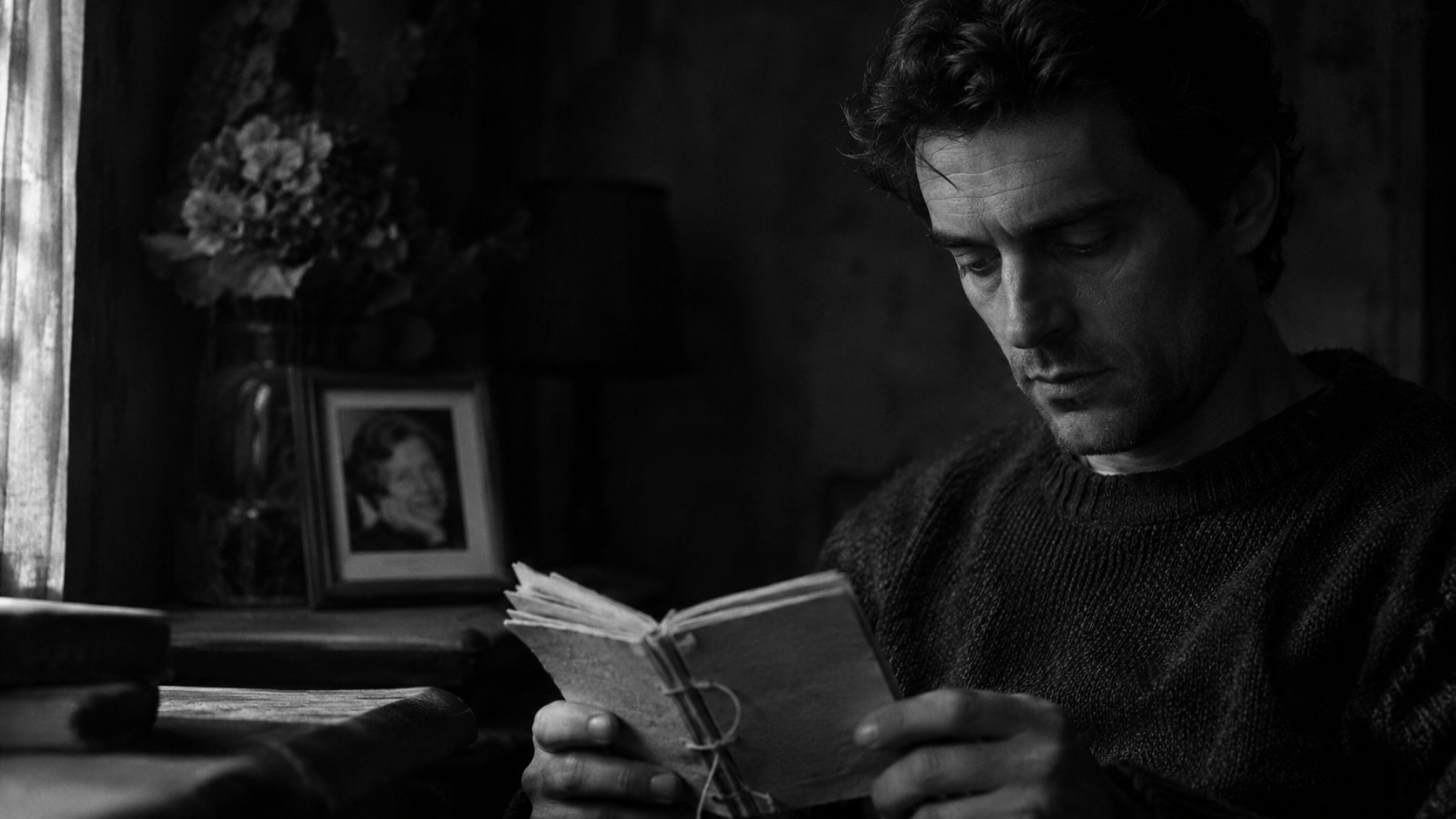
One detail of the account reveals how difficult this distinction can be to live with. Robson remembers that his mother had begun speaking about certain family episodes by replacing the pronoun “we” with expressions such as “your brother and I”. The change may seem insignificant until we consider that the first pronoun included the writer, whereas the second removed his participation from the event. We do not know whether the woman truly intended to exclude him, and her son’s testimony does not allow us to establish this. We can, however, understand why those words seemed to him to alter the past. When someone tells a shared story, they also decide who appears in it; the person who is excluded may continue to remember the episode without being able to recognise themselves in the account the other person offers.
The temptation, then, is to search retrospectively for an explanation capable of bringing the entire biography into order. If his mother now rejects the relationship, perhaps that childhood affection was never genuine; perhaps the happy episodes already concealed signs of the separation to come. Robson acknowledges having felt this temptation, which he deliberately tries to resist. The search for narrative coherence can, in fact, produce a kind of interpretative violence: in order to make sense of what is happening now, we rewrite what happened then. Childhood is subjected to the judgement of the present and ends up losing precisely the complexity that memory was supposed to preserve.
This difficulty also affects our understanding of narrative identity. If we insisted that a life must possess a unified meaning, accessible through a plot in which every event necessarily prepares the next, we would be forced to regard as contradictory those relationships that change without offering satisfactory reasons. Yet a person who once loved us may become a stranger without thereby making the love we received untrue. The story of the self must also be able to accommodate events that remain without a shared explanation. Perhaps narrative autonomy begins precisely when we become capable of bearing this incompleteness, accepting that the other person continues to belong to our history without remaining available to tell it with us.
The floral armchair remains, as do those sewn pages. Robson attributes to that memory a clarity that many other images of childhood have lost. We do not know whether it has survived because it foreshadows his future profession as a writer, as he himself suggests, or because it preserves an experience of attention that has now become particularly difficult to recover. The two interpretations may coexist. That little book, however, allows us to understand something that the metaphor of the extended mind risked leaving in the shadows: his mother was not simply storing information for her adult son; at that moment, she was recognising the value of a child’s voice by giving it her time.
The past does not become any less ours when we lose someone who could have recounted it to us, although the way we gain access to it may be profoundly wounded. What is required, then, is a form of fidelity more demanding than reconstruction: allowing an experience to have taken place without insisting that its meaning remain unchanged, and without erasing it because the person who shared it no longer wishes to remember it with us. The pages sewn together by his mother preserve this limit. The child telling the story could not have known how their relationship would change; the woman writing it down could not promise to remain the custodian of his stories forever. And yet, for as long as it took to compose that little book, one person’s voice had found a place within the other’s attention. No subsequent separation can establish that this encounter never took place.
References
Cavarero, A. (1997). Tu che mi guardi, tu che mi racconti. Filosofia della narrazione. Feltrinelli.
Robson, D. (2026, July 13). Unmothered. Aeon. https://aeon.co/essays/when-my-ties-to-my-mother-faded-so-did-my-memories


